Make or buy?
A simple homemade set can start with: 24 squares of card or thin wood, a marker, and the rune table from what are runes. Drawing the symbols gives you a way to practise recognizing them. Buying may suit you if you prefer finished pieces or do not enjoy making them. Neither choice guarantees a stronger spiritual connection or a more accurate reading. For the historical alphabet, the National Museum of Denmark documents the oldest 24-character rune row.
Materials compared
These are practical tendencies, not current price quotes or guarantees. Seller, craftsmanship, finish, size and shipping can matter more than material; compare actual listings before spending.
| Material | Feel | Durability | Cost | Notes |
|---|---|---|---|---|
| Card or paper | Light, quiet | Low; easy to replace | Low if supplies are on hand | Easy to replace; optional lamination adds cost |
| Wood (discs or tiles) | Warm, pleasant | Good; can chip or warp if wet | Low to medium | Check that marks stay readable and surfaces have no splinters |
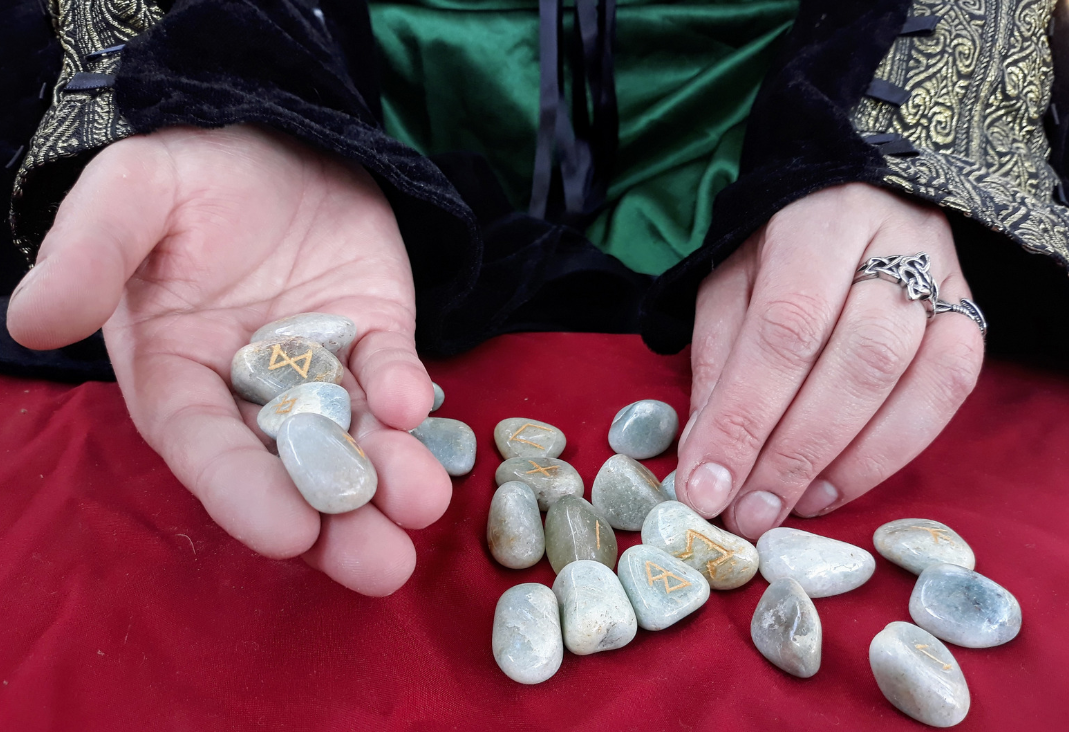
| Stone (tumbled or cut) | Cool, heavy, satisfying | Varies; may chip | Varies | Tumbled stones may not lie flat, which makes reversals ambiguous |
| Glass or ceramic | Smooth, uniform | Can chip or shatter | Low to medium | Similar shapes can make pieces harder to identify by touch |
| Bone or antler | Texture varies | High | Medium to high | Ask for the species and documented source. Check relevant wildlife and import/export rules; an ethical claim alone is not proof of lawful trade |
| Crystal | Decorative | Varies; soft stones scratch | Varies widely | Buy for appearance and handling, not healing or prediction promises |
Practical checks before buying
- Count. One of each of the 24 Elder Futhark characters. A blank piece is not a character in that alphabet and is optional in modern reading systems.
- Legibility. Marks deep or dark enough to read at arm’s length. Check similar-looking symbols against a clear alphabet reference.
- Uniformity. Tiles of similar size and weight so a blind draw is not biased toward the big ones.
- Flatness. If you read reversals, tiles need a clear top and bottom and should lie flat.
- A bag. An opaque bag or another comfortable way to draw pieces; no special fabric is required.
A “charged,” “blessed” or “activated” label does not establish healing, protection or predictive power. Keep a budget and do not pay extra because a seller says an ordinary set is unsafe. For animal materials crossing borders, U.S. Fish and Wildlife Service guidance includes antlers and bones among products that may be subject to wildlife rules; check the authorities relevant to your purchase.
A straightforward first choice
Prioritize clear symbols, comfortable handling and an affordable replacement cost. Keep small pieces away from children and pets. For a homemade set, use ordinary craft supplies safely rather than attempting unfamiliar carving or burning techniques.
Frequently asked questions
How many pieces should an Elder Futhark rune set have?
It needs one marked piece for each of the 24 characters. A blank piece is optional in some modern reading systems, not a character of the historical alphabet.
Is a crystal rune set more powerful than wood or card?
A material can change weight, texture and appearance, but it does not establish greater healing or predictive power. Choose for practical preferences and budget.
Can I make a simple rune set myself?
Yes. Clearly marked card pieces are one option. Check your symbols against a reliable alphabet reference and use craft tools safely; elaborate materials are not required.
What should I check before buying bone or antler runes?
Ask about the species, source and documentation, and check relevant wildlife and import/export requirements. Do not assume that a claim of ethical sourcing or naturally shed material settles the legal requirements.
The article does a good job of explaining how to choose a rune set that connects with you. It’s important to follow your intuition in divinatory practices.
It’s interesting to see the broad range of materials that can be used for runes. The considerations for durability and ease of carving are practical points to note.
The information on the different shapes and forms of runes made from various materials is very detailed. This can definitely help someone make an informed decision.
The article provides a well-rounded overview of different materials for making runes. It’s helpful for newcomers to understand the pros and cons of each material before making a choice.
The emphasis on ethical sourcing for materials like bones is commendable. Being conscientious about the origin of materials is crucial in any practice.
The suggestion to either buy or make your own rune set gives readers flexibility. Personal connection to the tool seems to be the key takeaway here.