
Quick guide
This optional self-check uses seven chakra-inspired headings for a life review: safety, pleasure and creativity, agency, connection, expression, insight and meaning. It does not measure an energy centre, diagnose a blockage or assess your health. Spiritual interpretations vary between traditions and practitioners. Use the headings only if they help you reflect; low scores or physical symptoms are not evidence of chakra damage.
Respecting the chakra map
Chakra teachings belong to Indian contemplative and religious traditions, with differing systems and interpretations. The seven-area exercise below is a modern reflective adaptation, not a complete account of Hindu or Buddhist practice. Its colours and life themes are optional prompts, not anatomical facts or a test that can locate an illness.
The ten-minute self-check
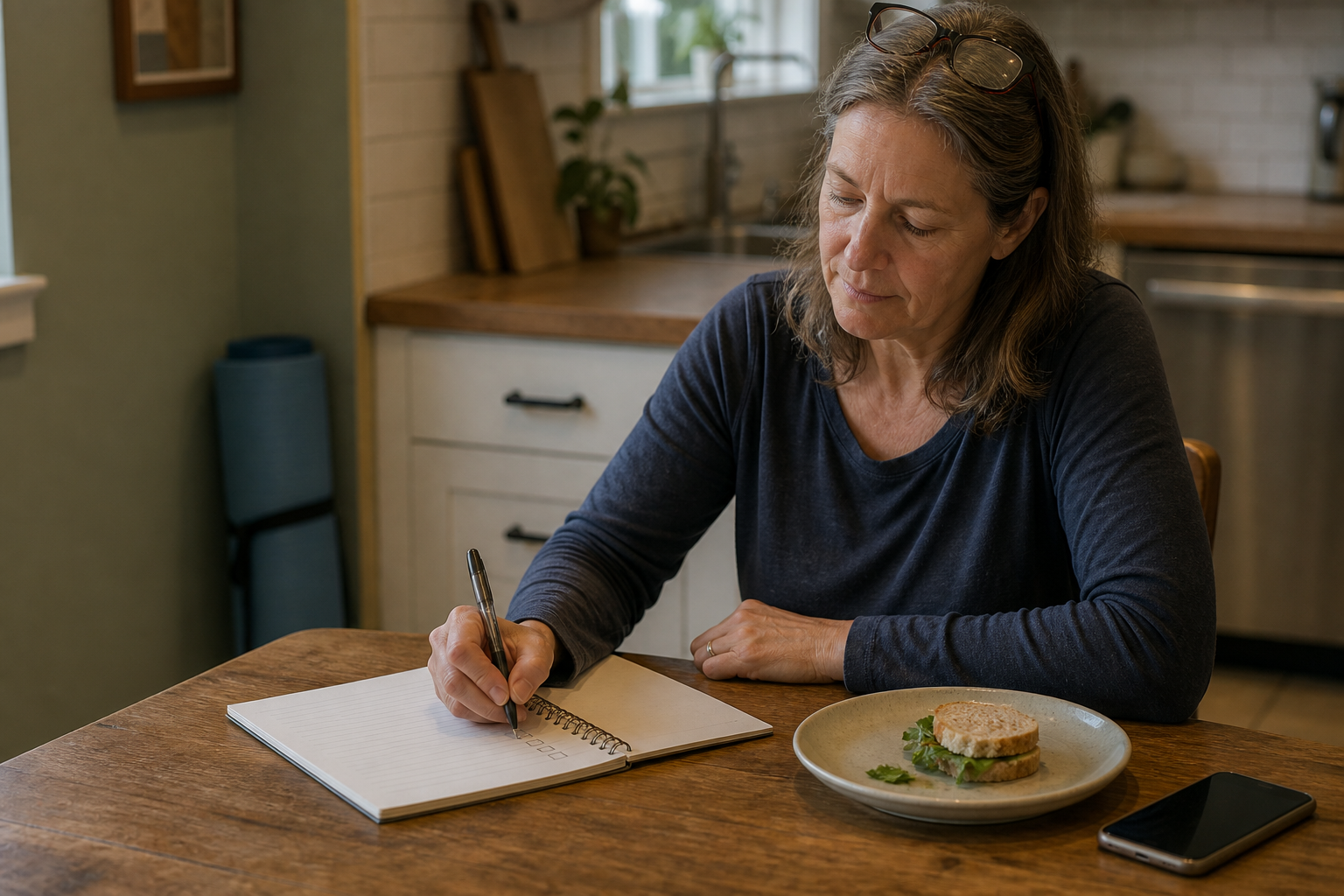
- 1. ListWrite the seven headings down the left of a page: Safety, Pleasure, Agency, Connection, Voice, Insight, Meaning.
- 2. ScoreGive each a number from 1 (neglected) to 5 (thriving) for the last month. Go with your first answer.
- 3. Pick oneChoose the lowest score. Only one. Write one sentence about what is actually going on there.
- 4. ActWrite one small, dated action for that area. Re-score in a month.
Treat the scores as personal notes, not a validated health scale or a requirement to fix the lowest number. You can skip scoring and write a sentence instead. Pause if the exercise increases worry or self-criticism.
The seven areas, translated
| Chakra-inspired prompt | Life area | Possible concern to explore | A practical move |
|---|---|---|---|
| Root (Muladhara), base of spine, red | Safety: housing, money, health, physical security | Living in survival mode; constant low-level fear about the basics | Choose one practical support step, such as asking for housing help, reviewing a budget or arranging a healthcare appointment. |
| Sacral (Svadhisthana), below navel, orange | Pleasure and creativity: enjoyment, play, intimacy | Everything is a chore; nothing is fun; creativity has dried up | Schedule one pleasant, useless thing a week. Protect it. |
| Solar plexus (Manipura), upper abdomen, yellow | Agency: confidence, decisions, follow-through | Feeling powerless; putting off decisions; being pushed around | Make one decision you have been avoiding, however small, today. |
| Heart (Anahata), centre of chest, green | Connection: love, friendship, compassion, boundaries | Isolation, resentment, no limits or walls everywhere | Contact one person you miss. Set one limit with one person who drains you. |
| Throat (Vishuddha), throat, blue | Voice: honesty, being heard, saying what you need | Swallowing what you think; feeling ignored; talking without saying anything | Consider one safe way to express a need. Do not confront someone if doing so could put you at risk. |
| Third eye (Ajna), brow, indigo | Insight: reflection, judgement, seeing the pattern | Fog; reacting rather than thinking; ignoring what you already know | Ten minutes of journaling or quiet each morning for a fortnight. |
| Crown (Sahasrara), top of head, violet | Meaning: purpose, wonder, belonging to something larger | “What is the point?”; going through the motions | Time in nature, in a community, in art or a practice that is bigger than you. |
The signs that are not chakra signs
A life-review prompt cannot distinguish ordinary stress from a medical or mental-health condition. Do not label symptoms as a blocked chakra or let a spiritual explanation delay care.
Optional reflection
You might use the headings to explore a manageable decision, an interest you have neglected or a boundary you want to practise. Reflection is optional. Loss of enjoyment, hopelessness or difficulty functioning can also deserve professional attention; do not dismiss them as simply needing a small life change.
Seek appropriate support
Persistent, distressing or worsening symptoms, concerns about substance use or eating, panic, unusual beliefs that frighten you, and physical symptoms deserve appropriate professional assessment. NIMH’s help-seeking guidance includes severe or distressing symptoms lasting two weeks or more; seek help sooner when symptoms are severe or worsening. In the U.S., call or text 988 for crisis support. For immediate danger use local emergency services; outside the U.S., use local crisis support.
What “opening a chakra” actually involves
- Meditation with a focus point. You may use a colour or image as an optional attention prompt. Benefits vary, and some people find meditation distressing. NCCIH discusses both possible benefits and negative experiences. Stop or modify a practice that makes you feel worse; there is no need to force an altered state.
- Yoga. Some yoga practices may help with stress, balance or certain pain conditions, but effects depend on the person and method. The National Center for Complementary and Integrative Health discusses benefits, limitations and safety in its yoga fact sheet. Choose an appropriate level with a qualified teacher and avoid painful or unsuitable postures.
- Affirmations. Saying “I am safe” to yourself does not make it so, but naming what you want to be true can help you notice what would need to change.
- Crystals, essential oils, coloured foods and metal spoons on the feet. These are not established ways to open energy centres or treat illness. Do not assume they are harmless: small objects can be choking hazards, oils can cause irritation or other adverse reactions, and dietary changes may be unsuitable for some people. Avoid ingesting oils or adding risky products to a reflective exercise.
- Reiki or “chakra balancing” sessions. Some people find sessions relaxing, but that is not guaranteed. NCCIH says Reiki has not been clearly shown effective for a health-related purpose and that evidence does not support the proposed energy field. A practitioner’s blockage claim is not a medical diagnosis. Our safety guide covers how to keep such sessions in their lane.
Chakras and runes: two maps, same job
This site is mostly about runes, and the two systems are used the same way here: as structured prompts for reflection. A rune drawn in the morning gives you a theme; a chakra self-check gives you seven areas to score. Neither exercise is a validated measurement of spiritual energy or a reliable forecast. A notebook can help keep interpretations separate from practical facts. If you like the rune approach, our guide to the runes is the place to start.
Key takeaways
- A chakra-inspired checklist is not a measurement of organs or spiritual energy.
- Used honestly, the seven chakras are seven headings for a life review: safety, pleasure, agency, connection, voice, insight, meaning.
- A low self-check score is a prompt for reflection, not proof of a blockage or a diagnosis.
- Addiction, persistent low mood, panic, paranoia and chronic physical symptoms are not chakra problems; they need a professional.
- Meditation and yoga may have benefits and risks; oils, objects and foods should not be assumed harmless or used as chakra treatments.
Frequently asked questions
1. Can chakras be measured?
There is no validated clinical chakra measurement used by this exercise. “Measuring up” means making personal notes about life areas, not detecting an energy centre or diagnosing health.
2. Are chakras real?
Chakras are meaningful concepts within contemplative and religious traditions. That cultural or spiritual meaning is different from demonstrating a measurable physical organ or energy field.
3. How do I know if a chakra is blocked?
This checklist cannot diagnose a blocked chakra. You can ask which area you would like to reflect on, while keeping health symptoms and safety concerns separate from spiritual interpretation.
4. Where do the chakra colours come from?
Colour associations depend on the teaching or system. The red-to-violet arrangement used here is a familiar modern presentation, not a universal rule or a health measurement.
5. How many chakras are there?
Seven is used in this exercise, but different traditions and modern teachers use different systems. Do not assume that every Hindu or Buddhist teaching has the same map.
6. Does chakra meditation work?
Some meditation practices may help some people, but effects vary and negative experiences can occur. This exercise does not demonstrate that meditation opens chakras; stop if it increases distress.
7. Can a blocked chakra cause illness?
There is no established basis for diagnosing illness as a chakra blockage. Physical or mental-health symptoms deserve appropriate assessment rather than an energy explanation.
8. Is addiction a sacral chakra problem?
No. Addiction is a medical and psychological condition with effective treatments. Talk to a GP or an addiction service.
9. Do crystals open chakras?
Crystals are not an established way to open chakras or treat illness. A stone may serve as a personal reminder, but keep small pieces away from children and pets and do not use crystal preparations as treatment.
10. Do purple foods help the third eye?
Food colour does not establish an effect on a spiritual third eye or psychic ability. Choose food for nutritional needs and preferences, with professional advice when needed.
11. Can a reiki practitioner balance my chakras?
Some people find a session relaxing, but Reiki has not been clearly shown effective for a health-related purpose. A chakra diagnosis should not replace medical assessment or justify changing treatment.
12. What is the crown chakra for?
In the map, meaning and connection to something larger. In practice: time in nature, community, art, faith or a discipline that is bigger than your to-do list.
13. How often should I do the self-check?
Choose a frequency that feels useful rather than compulsory; monthly is one option. Pause if scoring becomes a source of anxiety or reassurance-seeking.
14. What if every area scores low?
Low scores do not identify a cause. Consider practical support and speak with a healthcare professional if symptoms are persistent, distressing or affect daily functioning.
15. Is yoga necessary?
No. This reflection exercise does not require yoga. If you choose yoga, use suitable postures and guidance; benefits are variable and painful or unsafe practices should be avoided.
16. Can I open my third eye to become psychic?
There is no established method for turning a third-eye exercise into reliable psychic ability. Use it, if at all, as optional reflection rather than a way to discover hidden facts.
17. Are there dangers in chakra work?
Yes, depending on the practice. Meditation can be distressing, unsuitable yoga can cause injury, and oils or small objects can pose risks. Avoid replacing care, forcing altered states or paying to remove supposed blockages.
18. How do chakras relate to runes?
Runes and chakra teachings have different cultural histories. This page uses them only as separate possible prompts for reflection, not as evidence of a shared ancient system.
19. What is the eighth chakra?
Some modern systems use an eighth-chakra label, often above the head and associated with a higher self. It is a spiritual interpretation, not a detected anatomical structure.
20. What should I do first?
If the exercise feels helpful, write down the seven headings and choose one manageable action or support step. Skip scoring or stop altogether if it makes you anxious; urgent concerns need help, not a checklist.
Safety boundary: Do not change treatment or pay to remove a diagnosed spiritual blockage. If an exercise increases fear, stop and seek appropriate support.
The explanation of how meditation and healing can open chakras is quite detailed and practical.
Understanding the symptoms of blocked and open chakras can be very useful for personal development and well-being.
Yes, such awareness can lead to more effective self-care practices.
While I am skeptical about the spiritual aspects, the psychological implications of feeling balanced or blocked are clear.
This article has piqued my interest in learning more about chakras and how they impact our daily lives.
The concept of chakras as energy centers is fascinating. It’s interesting to see how each chakra is associated with specific feelings and behaviors.
Indeed, it’s a holistic approach to understanding human emotions and physical health.
This article provides a comprehensive overview of the chakras. The connection between physical and spiritual aspects is particularly noteworthy.
Absolutely, blending spiritual insights with physical health can be quite enlightening.