

Quick answer
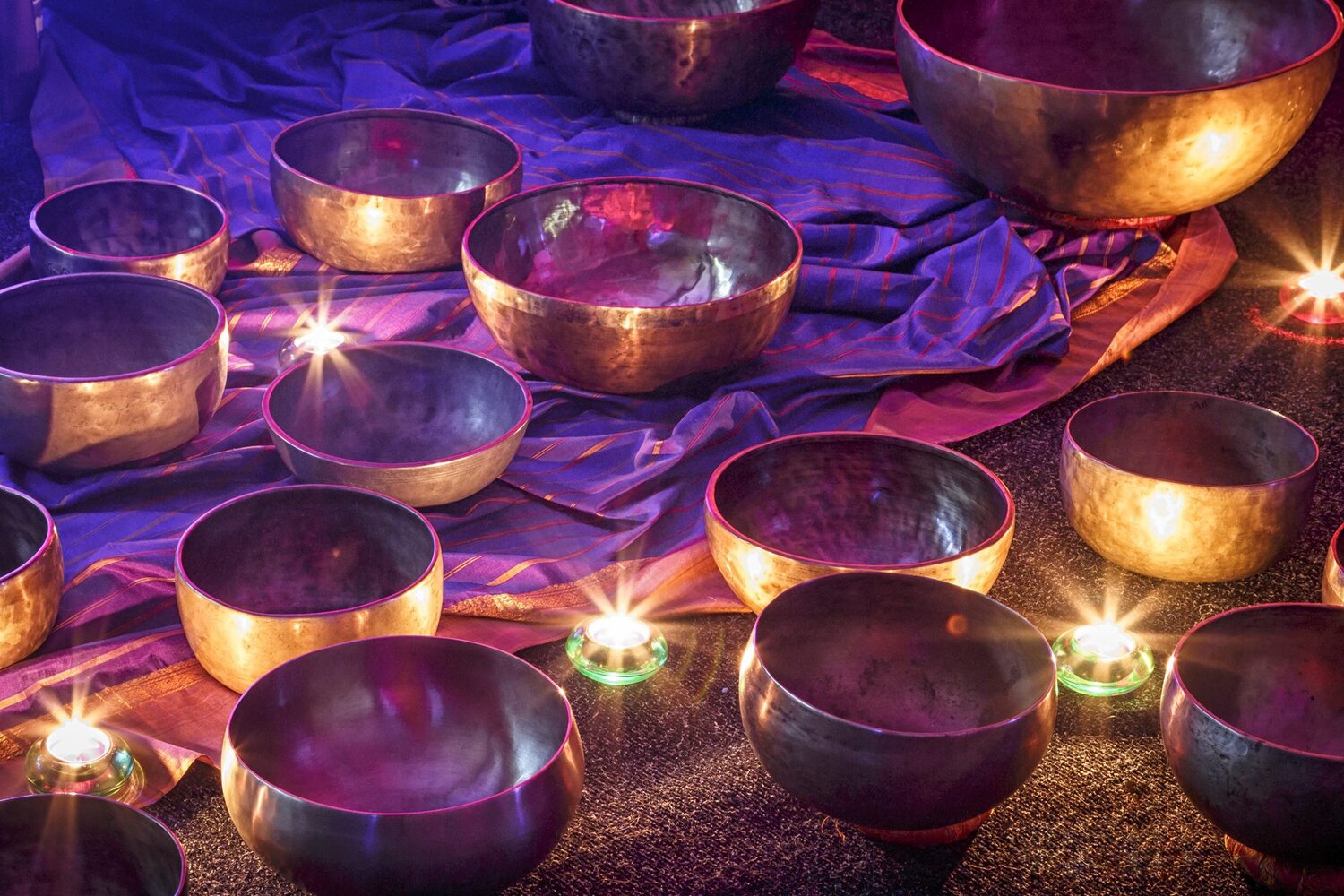
Sound healing (also called a sound bath or sound meditation) is a session where you lie down while a practitioner plays singing bowls, gongs, tuning forks or chimes for thirty to ninety minutes. It is a guided relaxation with instruments. Small studies find it lowers reported tension, anxiety and low mood in the short term, about as much as other relaxation methods; nothing shows it treats any illness, corrects “brainwaves” or changes an energy field. It is pleasant, low-risk and worth trying if you find it hard to switch off.
What happens in a session
- You arrive with a mat, blanket and pillow and lie down, usually in a group of five to thirty people. Eye masks are common.
- The practitioner plays instruments — metal “Tibetan” bowls, quartz crystal bowls, gongs, tuning forks, chimes, sometimes voice — in long sustained tones rather than melodies.
- You do nothing. Many people drift toward sleep; some feel emotional; a few find the gongs too loud and step out.
- It ends with silence and a slow return. Expect to feel calm and slightly dazed for an hour afterwards.
Group sessions cost about the price of a yoga class. Private sessions cost more and offer the same thing with fewer people in the room.
What the evidence actually shows
| Claim | Evidence |
|---|---|
| Reduces tension, anxiety and low mood after a session | Supported by small before-and-after studies of singing bowl meditation, with the caveat that lying still in a dark room for an hour does the same and the studies rarely control for that. |
| Lowers blood pressure and heart rate | Plausible for the duration of the session, as with any relaxation. No evidence of lasting change. |
| “Changes brainwaves” and “reorders” the brain of people with mental illness | Not supported. Brain activity changes with any relaxed or drowsy state; there is no disordered brainwave that a gong corrects, and this claim should not be made to people with a mental health condition. |
| Relieves physical pain | Relaxation can lower pain perception briefly. Sound healing does not treat the cause of pain. |
| Helps memory, “gets rid of” anxiety | No evidence for memory. Anxiety disorders respond to therapy and, where appropriate, medication; a sound bath can sit alongside, not instead. |
The National Center for Complementary and Integrative Health has a balanced summary of what music-based approaches can and cannot do in Music and Health: What You Need To Know.
Choosing a session
- Ask about volume. Gongs can reach levels that are uncomfortable or harmful with long exposure. Sit further away or bring earplugs if you are sensitive to sound; do not simply switch off hearing aids and hope.
- Prefer practitioners who call it relaxation. Anyone who promises to treat a condition, “retune your cells” or fix your energy field is overselling.
- Tell them about relevant conditions. If you have a seizure disorder, a pacemaker, are pregnant, or have tinnitus or hyperacusis, ask before booking and keep the volume low.
- Go more than once before judging. The first session is mostly novelty. By the third you know whether it helps you unwind.
- Try the free version. Long recordings of bowls or drones with headphones at low volume, lying down for twenty minutes, deliver most of the effect.
Related reading
- Breathwork: benefits and safety
- How do your chakras measure up? A seven-area self-check
- Using runes alongside medical care: a safety guide
- Can runes heal? What tradition and evidence say
Evidence note: Claims about energy fields and brainwave correction are described here as claims, not facts. Sound baths are a relaxation practice; they are not a treatment for any physical or mental health condition. Nothing on this page replaces medical advice.
Sound healing appears to offer numerous benefits for relaxation and mental health. However, it’s essential to approach it as a complementary therapy rather than a primary treatment for serious conditions.
I’ve heard about sound healing before, but this article gave me a better understanding of what happens during a session. Might be worth trying out.
Personal anecdotes are useful, but scientific validation would make a stronger case for its widespread adoption.
I attended a session once, and it was quite relaxing. However, experiences can vary, so it’s good to keep an open mind.
It’s intriguing that sound healing can influence brain waves and physical conditions. I’d like to see more evidence on its efficacy.
I agree, more empirical research would provide a solid foundation for understanding the true benefits and limitations of this practice.
While the concept of sound healing is compelling, I remain skeptical until I see more peer-reviewed studies proving its effectiveness.
Sound healing seems like a fascinating alternative therapy. I appreciate the detailed description of how sessions might vary with different instruments.
The article provides an interesting overview of sound healing and its potential benefits. I’m curious about the scientific studies behind these claims.