
Quick answer
Sound healing is an umbrella term often used for sound baths or meditations with bowls, gongs, chimes or other instruments. You may sit or lie down and listen; sessions vary. Some people find them relaxing, but effects are not guaranteed. Singing-bowl research suggests possible benefits for stress and well-being, not proof that a session cures illness or repairs an energy field. A sound bath is not automatically credentialed music therapy.
What happens in a session
- You arrive with a mat, blanket and pillow or ask what the venue provides. Choose a comfortable seated or lying position; eye masks and group participation are optional.
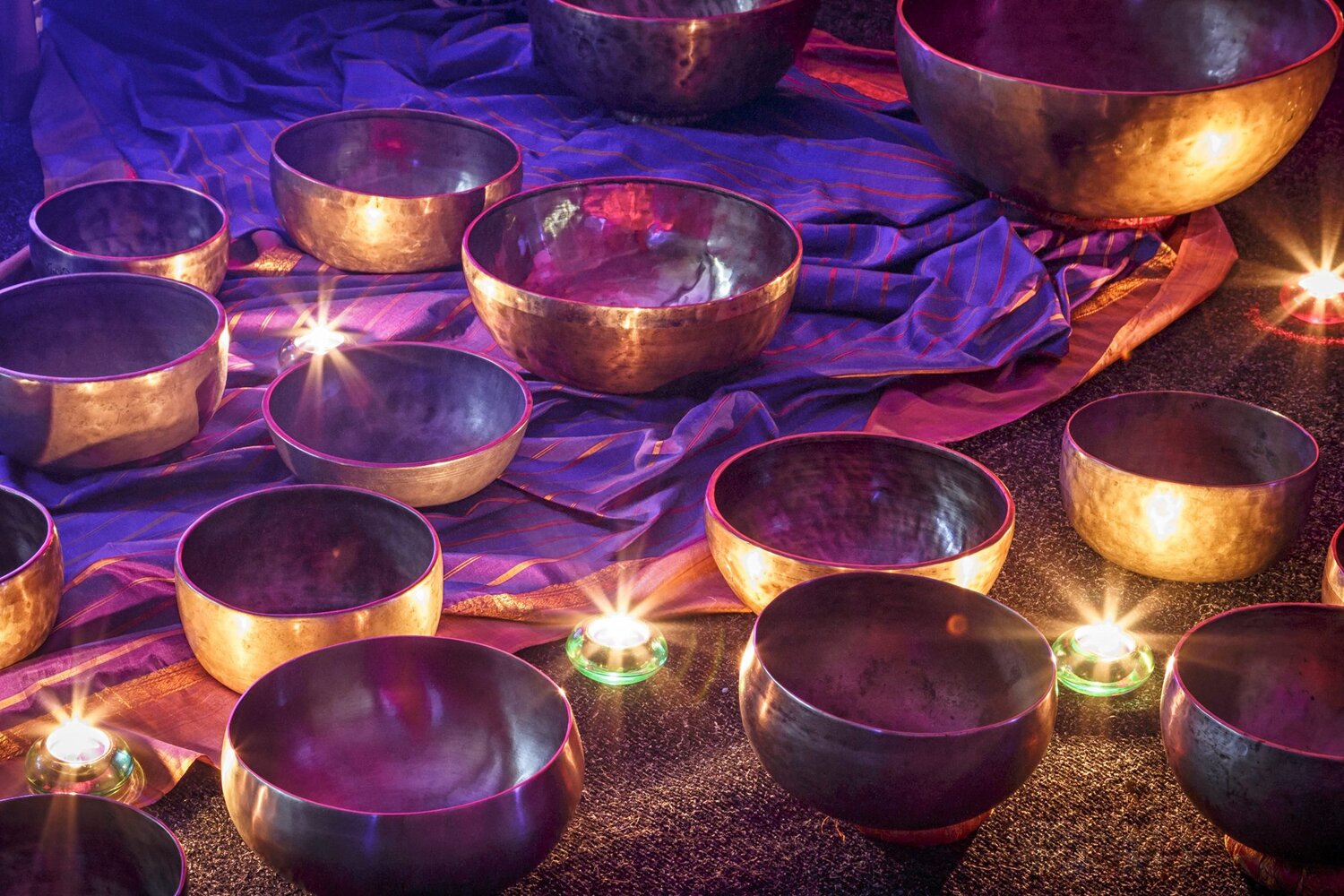
- The practitioner plays instruments — metal singing bowls, quartz crystal bowls, gongs, tuning forks, chimes, sometimes voice — in long sustained tones rather than melodies.
- You listen at your own pace. You can keep your eyes open, change position or leave. Stop if the sound or setting is painful or distressing.
- It ends with silence and a slow return. How you feel afterwards varies; take time before standing and do not drive if you feel dizzy or unwell.
Prices, duration and arrangements vary. Ask for the full cost, cancellation terms, instrument placement, accessibility and volume policy before booking.
What the evidence actually shows
| Claim | Evidence |
|---|---|
| Stress, tension and mood | Studies suggest possible improvements, but they do not guarantee benefit for an individual or establish that bowls outperform quiet rest or other relaxation approaches. |
| Blood pressure and heart rate | Changes reported during or after a session do not establish lasting disease control. Keep prescribed treatment and monitoring. |
| “Retunes” brainwaves or repairs an energy field | Claims of correcting a disorder through a particular frequency need credible condition-specific evidence. Feeling relaxed is not evidence that an illness or energy field has been repaired. |
| Pain relief | Broader music-based research suggests possible symptom relief in some settings. That cannot be assumed for every sound bath, and symptom relief does not establish treatment of the cause. |
| Memory or elimination of anxiety | Evidence for other music interventions cannot be transferred automatically to singing bowls. A sound bath should not replace assessment or established treatment for persistent symptoms. |
A 2025 review of fourteen singing-bowl studies describes potential stress and well-being benefits. Potential is not a guarantee or evidence that every format has the same effects.
The National Center for Complementary and Integrative Health has a balanced summary of what music-based approaches can and cannot do in Music and Health: What You Need To Know. Music therapy refers to a trained professional’s therapeutic work, not simply playing a particular instrument. Its evidence should not be treated as proof of commercial sound-bath claims.
Choosing a session
- Ask about volume. Loud sound can damage hearing. Request lower volume, move away or leave if uncomfortable. Discuss hearing protection and hearing-aid use with your hearing professional rather than assuming an adjustment makes loud sound safe.
- Prefer practitioners who call it relaxation. Anyone who promises to treat a condition, “retune your cells” or fix your energy field is overselling.
- Ask about the exact practice. If you have sound sensitivity, tinnitus or health concerns, consult an appropriate clinician about participation. Tell the practitioner your limits; ask whether instruments touch the body or other activities are included.
- No repeat purchase is required. Decide whether you enjoy it and whether the cost works for you. You can stop after one session or choose another relaxation activity.
- Try a low-cost alternative if you wish. Comfortable-volume recordings, quiet rest or a walk may be preferable. Recordings are not proven equivalent to a live session; stop if they distress you.
If you prefer another optional relaxation practice, our breathwork benefits and safety guide explains limits and comfortable breathing. For the broader distinction between spiritual practice and treatment, see Can runes heal?
Keep medical care for symptoms and health conditions. Ask a practitioner to explain qualifications, limitations and safety arrangements without promises of a cure.
Frequently asked questions
Is a sound bath the same as music therapy?
No. A sound bath is generally a listening or relaxation session. Music therapy involves a qualified professional using music within a therapeutic relationship; the label depends on training and practice, not the instrument.
Will singing bowls definitely reduce stress?
No. Research suggests possible benefits for some people, but a session may feel neutral, unpleasant or distressing. You can stop or choose another activity.
Can sound healing replace treatment?
No. Do not use a sound bath to replace medical assessment, prescribed treatment or mental-health care. Claims of curing illness or repairing an energy field require evidence, not testimonials alone.
What if the instruments are too loud?
Ask for the volume to be reduced, move away or leave. Do not endure painful sound. If you have hearing or sound-sensitivity concerns, discuss participation and protection with an appropriate professional.
Sound healing appears to offer numerous benefits for relaxation and mental health. However, it’s essential to approach it as a complementary therapy rather than a primary treatment for serious conditions.
I’ve heard about sound healing before, but this article gave me a better understanding of what happens during a session. Might be worth trying out.
Personal anecdotes are useful, but scientific validation would make a stronger case for its widespread adoption.
I attended a session once, and it was quite relaxing. However, experiences can vary, so it’s good to keep an open mind.
It’s intriguing that sound healing can influence brain waves and physical conditions. I’d like to see more evidence on its efficacy.
I agree, more empirical research would provide a solid foundation for understanding the true benefits and limitations of this practice.
While the concept of sound healing is compelling, I remain skeptical until I see more peer-reviewed studies proving its effectiveness.
Sound healing seems like a fascinating alternative therapy. I appreciate the detailed description of how sessions might vary with different instruments.
The article provides an interesting overview of sound healing and its potential benefits. I’m curious about the scientific studies behind these claims.